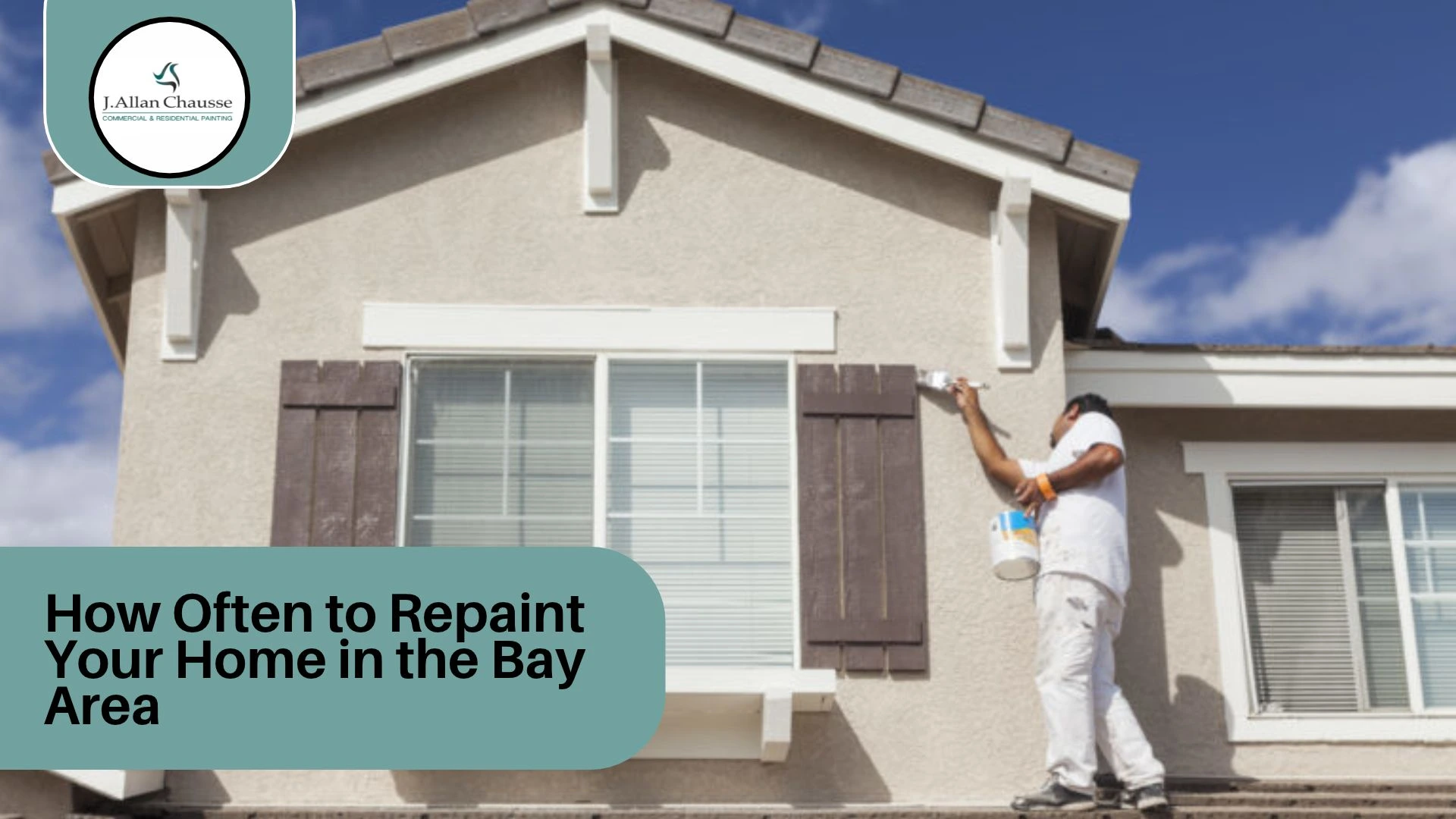
Your home’s paint can look fine one year and start peeling the next. In the Bay Area, coastal fog, damp air, and strong sunshine can slowly wear down exterior paint. Most homes need a fresh coat every 7 to 10 years, while wood siding near the coast may need repainting every 4 to 7 years. Stucco and fiber cement often last longer, depending on their condition and upkeep.
Wondering if your home is ready for a fresh coat? Check for peeling paint, faded colors, chalky marks, or cracks around windows and doors. These small signs can point to bigger problems if left untreated. Repainting at the right time helps protect your siding, freshen up your home’s appearance, and avoid repair costs that can grow when paint damage is ignored.
Your Home, Your Climate, Your Repaint Timeline
Don’t think of watching the clock; instead, take a look at your wall. Exposed walls will begin to fade, chalky dust, or crack in the presence of fog, strong sun, and heavy rain outside. Formal living areas are quiet rooms that will maintain their fresh appearance for a long time, but busy spots are another story. Steam, grease, and heat get to bathrooms; paint gets scuffed and scrubbed all day in hallways and until the paint wears off in kids’ rooms. If any of the above actual symptoms are noticed, it’s time to repaint.
Several things push you toward the short or long end of that range: the type of siding, the quality of the paint, how well the surface was prepped, and how much sun, fog, and rain your home takes. A house in Walnut Creek with full afternoon sun faces very different wear than one in San Francisco sitting under fog most of the year. That’s why “how often to paint a house” gets a different answer depending on who you ask and where they live.
Fog, Sun, and Rain: What the Bay Area Does to Exterior Paint
The Bay Area doesn’t have harsh winters, but it still puts paint through a lot. Along the coast and around the bay, fog and damp air keep moisture sitting on siding for hours every morning. Over time, that moisture works its way under the paint film and causes bubbling, peeling, and mildew. Salt in the air near the water also wears down trim, railings, and metal details faster.
Move inland to places like Concord, Danville, San Ramon, or Pleasanton, and the problem flips. Summers are hot and dry, and UV rays break down the binders that hold paint together. You get fading, chalking, and tiny cracks that let winter rain slip in. South- and west-facing walls take the worst of it, so it’s common for one side of a house to look ready for paint while the other still looks fine.
Quality matters too. A premium acrylic Exterior Paint put on over clean, primed surfaces can reach 10 years or a bit more. A budget paint rolled over dirty, unprimed walls might start failing in 4 or 5 years. Prep and application matter just as much as the paint in the can, and they’re the biggest factors in your exterior paint lifespan.
Side-by-Side: Paint Lifespan by Surface
Not every surface ages the same way. This table gives you a realistic starting point for the Bay Area.
| Surface Type | Typical Repaint Frequency | What to Watch For |
| Wood siding | Every 4–7 years | Peeling, swelling, soft spots from fog and rain |
| Stucco | Every 7–10 years | Hairline cracks that let water in |
| Fiber cement (Hardie) | Every 10–15 years | Dried-out caulk at seams and trim |
| Painted brick | Every 10–15 years | Flaking caused by trapped moisture |
| Trim, doors, fascia | Every 3–5 years | Sun damage and bare wood |
| Interior walls | Every 5–7 years | Scuffs, stains, dull patches in busy rooms |
Trim and doors are usually the first parts of a house to need attention. Because they take direct sun and rain, they often fail years before the siding does. Many homeowners handle trim and doors on their own schedule and repaint the whole exterior later.
Inside the Walls: Interior Repainting Frequency
Inside the house paint doesn’t fight the weather, but it deals with hands, furniture, steam, and sunlight through windows. Living rooms and bedrooms with light use can go 7 years or longer. Hallways, kitchens, and kids’ rooms often need a fresh coat sooner because of scuffs and grease marks. Bathrooms are the exception: humidity can cause peeling and mildew, so they may need attention every 3 to 5 years even if the rest of the house looks fine.
If you’re planning to sell or you’re just tired of looking at the same walls, you don’t have to wait for damage. A new interior color is one of the cheapest ways to make a home feel updated.
Red Flags Your Walls Are Asking for Paint
- Paint peeling or flaking off in strips
- Chalky white residue when you rub the wall with your hand
- Visible cracks or bubbling, especially around windows and doors
- Faded color, mostly on sun-facing walls
- Dark spots or green patches from mildew and algae
- Caulk that has dried out, shrunk, or pulled away from trim
- Bare wood showing through on siding or fascia
- Walls that stay dirty even after pressure washing
Hidden Habits That Shorten Your Paint’s Life
- Skipping prep work like scraping, sanding, and priming
- Painting over damp or dirty surfaces
- Low-grade paint with fewer solids
- Dark colors on walls that get heavy sun
- Sprinklers that spray the siding
- Tree branches that keep walls damp and shaded
- Old caulk that lets water behind the paint
Waiting feels cheaper, but it often isn’t. Once paint fails, water gets into the wood or stucco underneath. Then you’re paying for repairs on top of paint: replacing rotted boards, patching cracked stucco, treating mold. A repaint done while the surface is still sound mostly needs light prep and two good coats, which keeps the cost and the mess down.
Paint Now or Wait a Little Longer: Making the Call
On the other hand, repainting too early isn’t smart either. If your paint is only slightly faded and firmly stuck to the wall, you can often wait a year or two. A good wash and some touch-ups on the trim can buy you time without a full project.
The first step to getting an estimate from homeowners when they call J Allan Chausse Painting is getting on the property! We press on the siding, look at the caulk, look at the walls facing the sun, and then give a candid answer: paint it now; paint it soon; or wait. An action like this can save thousands of dollars and only takes minutes to accomplish.
Simple Upkeep That Stretches Every Paint Job
A little upkeep stretches your repaint timeline. Wash the exterior once a year with a soft brush or low-pressure rinse to remove dirt and mildew before they eat into the paint. Check caulk around windows and doors every spring, and reseal any gaps. Trim back trees and shrubs so walls can dry out after fog and rain. Point sprinklers away from the house so they stop soaking the siding.
When it’s time to repaint, choose a quality exterior acrylic with UV protection. Lighter, mid-tone colors fade more slowly under strong sun than deep, dark shades. And if you spot a small peeling patch, fix it right away. A ten-minute touch-up now is far easier than repairing a whole wall later.
FAQS
What is the proper number of times to repaint houses in the Bay Area?
Exterior painting is recommended for most homes in the Bay Area every 5-10 years, depending on the quality of the paint, the surface material and exposure to the sun and weather. Interior walls of high-traffic areas, such as the hallways and kitchen, will require more frequent painting, perhaps every 3-7 years.
Is repainting a house a frequent event or not in Bay Area?
Yes, there are some issues caused by the weather in the Bay Area. The exterior paint can get faded due to the moisture from the fog, temperature differences in the warmer inland areas, and the high amounts of sunlight. If your home is on the coast, it will likely be more moist, and homes in warmer climates can fade quicker.
What is the average frequency of repainting houses in Oakland and Berkeley?
Homes in Oakland and Berkeley will be repainted at different times based on the amount of exposure they have to sunlight, moisture, and general use. When properly applied and properly maintained, exterior paint may last for up to 5-10 years; however, some surfaces may require attention sooner.
What are some of the indications that your Bay Area house requires painting?
Common signs and symptoms include peeling paint, cracking, fading, bubbling, chalky paint and bare wood or other underlying paint; they can also be bare metal, blistering, or rusting. Mildew may be as much as moisture stains, which can be a problem and must be addressed prior to repainting. If these issues are addressed early on, the chances are that damage to the surface can be prevented and the house will look better.
Which is the best time of year to paint a house in the Bay Area?
In many communities in the Bay Area, exterior painting is a good time to do in late spring and early fall. Coastal fog, wet mornings, sudden rain and changes in temperature, however can impact drying and curing. A professional painter should consult the weather forecast and the manufacturer’s directions for minimum and maximum temperatures and humidity for paint application.
Ready When Your Walls Are: Let’s Take a Look Together
Every house is different, and a short walk around your property tells us more than any chart can. J Allan Chausse Painting offers free estimates, and we’ll tell you straight whether you need a full repaint now or can hold off a little longer. If you’re in the Bay Area and your paint is starting to look tired, call [Business Name] today and get a clear plan with no pressure.